


 4.7
4.7




About Microsoft Excel: Spreadsheets
Editor's Review
Microsoft Excel is the silent genius that slipped in dressed in a ledger and killed half the modern world. Underneath the grid that you test yourself against is an engine of almost unreasonable power, chomping through jagged lines of numbers, turning them into living narratives faster than any human being could scribble them on paper.
Its greatest gift is immediacy, type a figure, press Enter, and the sum just rises like the ripple from a stone's throw hitting still waters, each affected cell sucking in new significance in micro-seconds. And because the hokey thing just works, it trains intuition dynamically in a way that static documents never could, letting planners feel the weight of a budget line as it swells or shrinks beneath their fingertips.
Speed alone didn't keep the designers from clarity, however; conditional formatting paints trends in traffic-light colors, sparklines reduce quarterly sagas to thumbplacards, and its number formats library translates currencies and percentages and calendar dates into a universal tongue with nary an extra keystroke.
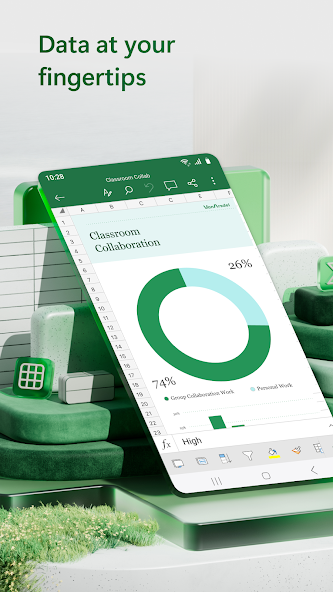
Collaboration, once the outlier Achilles' heel of desktop productivity, now hums via co-authoring windows that bloom like ghostly cursor-fireflies across the sheet. A finance team in Tokyo sees a colleague in São Paulo color-coding assumptions live, chat comments sticking to cells so context never dissipates into email threads.
Version history leaves behind an indelible breadcrumb trail, transforming the fear of overwriting into the mild shame of a hasty rollback. Mobile parity clinches it: a farmer can recalculate crop yields on a sun-bleached phone and the very same file will bloom later on a theater-sized Surface Hub where executives trace trend lines with dry-erase gestures.
At every shift of form, Excel has stayed true to its founding vow: Give the average human superhuman fluency in the language of numbers, and she or he will fashion budgets, satellites, vaccines, novels, maybe even art whose presence no one guessed could dwell within a grid.


Features of Microsoft Excel: Spreadsheets
Grid Interface with Cells, Rows and Columns: Its worksheet is constituted by a grid, where data is organized in a cell-by-cell way (A1, B2), groups according to rows and columns, being an organized method for the data input and the data management.
Formulas and Functions: Excel has a huge library of preset functions, like SUM, VLOOKUP, XLOOKUP, IF, AVERAGE. They do calculations, analyze, and even automate work based on the data in cells.
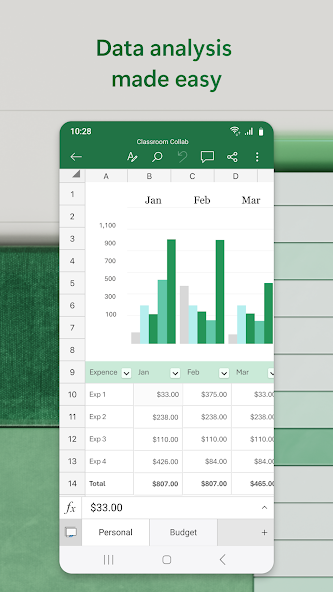
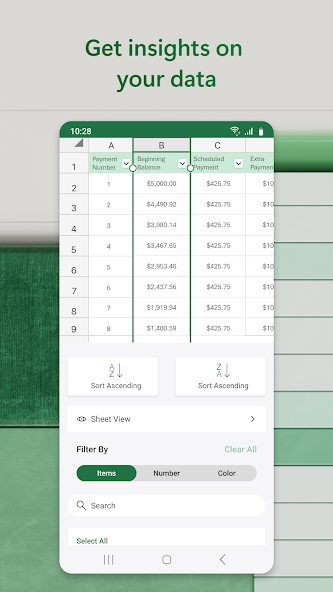
PivotTables and PivotCharts: Analyze related data, and get details about sum, count, average, and other numerical values at a glance, using the new Quick Analysis tool.
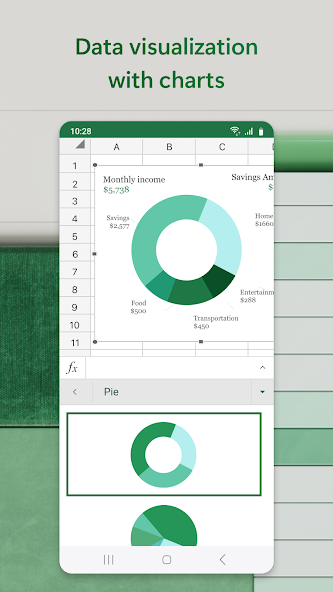
Data Visualization Tools: Charts and types (bar, line, pie, scatter plot, etc.), conditional formatting and sparklines enables you to visualize your data quickly and easily for things like graphs, charts or dashboards.
Ratings
This number is based on download statistics from Google Play and may include historical
data.